


 中文简体
中文简体 What Should You Know Before Buying Stainless Steel Bar or Plate?
Stainless steel bar and plate are among the most widely specified materials in industrial, commercial, and architectural applications. Yet buying them well requires more than simply knowing what size you need. Grade selection, surface condition, dimensional tolerances, certification requirements, and supplier quality all have direct consequences on whether the material performs as intended — and whether your project stays on budget and on schedule. This guide covers the practical factors that buyers, engineers, and procurement professionals should evaluate before placing an order.
Start With the Right Grade
Grade selection is the most consequential decision when buying stainless steel. The grade determines corrosion resistance, mechanical strength, weldability, and temperature performance. Choosing the wrong grade results in premature failure, unnecessary cost, or processing difficulties that could have been avoided at the specification stage.
The austenitic family accounts for the majority of stainless steel bar and plate used globally. Within this group, 304 and 316 are the most common grades and are the right starting point for most buyers evaluating their options.
| Grade | Key Composition | Corrosion Resistance | Typical Applications |
| 304 / 1.4301 | 18% Cr, 8% Ni | Good — general environments | Food processing, architecture, general fabrication |
| 316 / 1.4401 | 16% Cr, 10% Ni, 2% Mo | Superior — chloride environments | Marine, chemical processing, pharmaceutical |
| 316L / 1.4404 | Low carbon 316 | Superior + weld corrosion resistant | Welded structures in aggressive environments |
| 2205 Duplex | 22% Cr, 5% Ni, 3% Mo | Excellent — pitting and stress corrosion | Oil and gas, desalination, structural offshore |
| 410 / 430 | Ferritic / Martensitic | Moderate | Cutlery, automotive trim, mildly corrosive settings |
The molybdenum content in 316 and 316L is the critical difference over 304. It provides substantially better resistance to chloride-induced pitting corrosion — a form of localised attack that occurs in coastal, marine, or chemical processing environments. If there is any doubt about chloride exposure in your application, specifying 316L over 304 is the safer and more defensible choice. The cost premium is real but modest compared to the cost of premature replacement.
Bar vs. Plate: Choosing the Right Product Form
Stainless steel bar and plate are distinct product forms with different manufacturing routes, dimensional ranges, and appropriate uses. Understanding this distinction prevents ordering the wrong form entirely.
Stainless Steel Bar
Bar is produced in long lengths and supplied in round, flat, square, or hexagonal cross-sections. It is manufactured either hot-rolled and then turned, ground, or polished to achieve precise dimensional tolerances, or cold-drawn to produce closer tolerances and a smoother surface from the start. Bar is the primary product form for shafts, fasteners, machined components, fittings, and structural elements that require tight dimensional control. When buying bar, key variables include cross-sectional shape, diameter or width, surface condition (black hot-rolled, bright drawn, ground, or polished), length, and whether it needs to meet specific straightness tolerances for machining.
Stainless Steel Plate
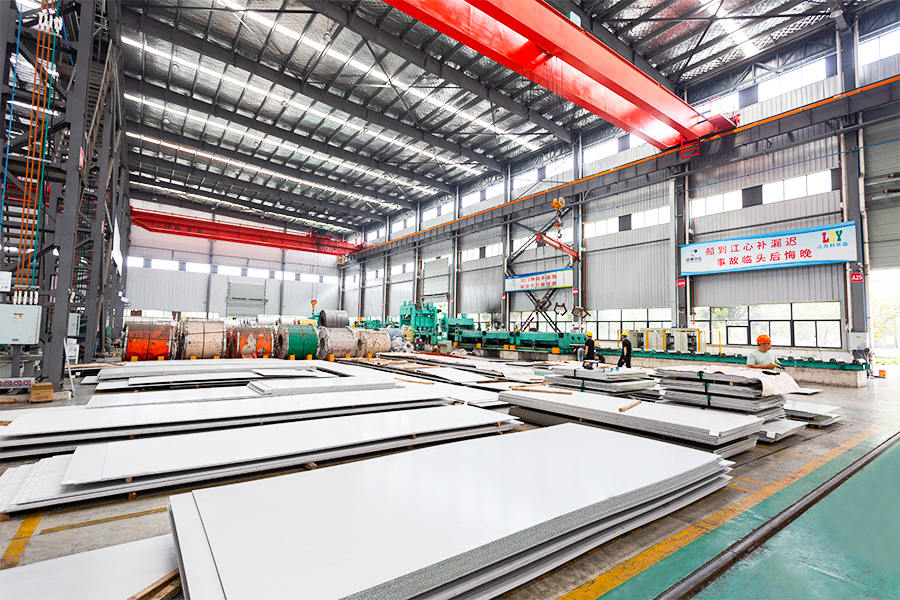
Plate is flat-rolled material supplied in sheets or cut pieces, typically classified as plate when the thickness is 3 mm or greater (material below this threshold is generally described as sheet or strip). Plate is used for structural fabrication, pressure vessels, tanks, cladding, and architectural panels. The key purchasing variables for plate include thickness, width, length, surface finish, flatness tolerance, and whether the material is produced to a specific pressure vessel or structural standard. Plate is typically sourced in standard mill dimensions and then cut to size by the supplier or processor, with cutting method (laser, plasma, waterjet, or saw) affecting edge quality and heat-affected zones in the material.
Surface Finish and Its Practical Implications
Surface finish on stainless steel bar and plate affects appearance, corrosion performance, cleanability, and suitability for specific fabrication processes. It is not purely a cosmetic specification — in food, pharmaceutical, and sanitary applications, surface finish has regulatory significance. The most commonly specified finishes are defined by international standards including ASTM A480 and EN 10088.
- No.1 (Hot Rolled, Annealed, Pickled): A rough, matte finish produced by hot rolling and acid pickling. Used in industrial applications where appearance is irrelevant and subsequent processing will alter the surface.
- 2B: The most widely used finish for plate. Cold-rolled, annealed, and skin-passed to produce a smooth, reflective but not mirror-like surface. Suitable for general fabrication and forms the basis for further polishing.
- No.4 (Brushed/Satin): A directional, brushed finish produced by polishing with progressively finer abrasives. Widely used in architectural, catering, and appliance applications where a clean, professional appearance is needed.
- BA (Bright Annealed): A highly reflective mirror-like finish produced by annealing in a controlled atmosphere. Used in decorative, food contact, and pharmaceutical applications requiring the highest level of surface cleanliness.
- Ground or Turned (Bar): Bar is often supplied ground to a specific diameter tolerance or turned and polished for precision machined applications. The Ra (roughness average) value specified determines the smoothness of the surface.
Dimensional Tolerances and Standards
Dimensional tolerances define how much variation from the specified dimension is acceptable in the supplied material. For bar, this includes diameter or width tolerance, length tolerance, and straightness. For plate, it covers thickness tolerance, flatness, and squareness of cut edges. These tolerances are governed by standards such as ASTM A484, EN 10278 (bar), and EN 10029 or ASTM A480 (plate).
In precision machining, a bar that is within standard tolerance but at the outer limit of its diameter variation can still cause problems if the machining allowance has not accounted for it. Always confirm the applicable tolerance class when ordering bar for close-tolerance machined components, and specify the tightest tolerance class the application requires rather than accepting the mill standard default. For plate used in pressure vessel fabrication, the thickness tolerance standard must often comply with the relevant pressure equipment directive or code (such as ASME VIII or PED 2014/68/EU), which may impose stricter requirements than standard commercial tolerances.
Mill Certifications and Material Traceability
Material certification is the documentary foundation of any stainless steel purchase where quality and compliance matter. The most important document is the mill test certificate (MTC), also called a material test report (MTR), which records the chemical composition and mechanical properties of the specific heat or batch from which your material was produced. Without an MTC, there is no way to verify that the supplied material meets the grade specification it claims to be.
Certifications are issued under different standards depending on the market and application. EN 10204 is the dominant European standard for material certificates, and it defines four certificate types:
- 2.1: Declaration of compliance with the order — no test results, least rigorous.
- 2.2: Test report with non-specific inspection results from the manufacturer.
- 3.1: Certificate validated by the manufacturer's own authorised inspector, referencing the specific heat. Required in most engineering and pressure vessel applications.
- 3.2: Certificate validated by both the manufacturer and an independent third-party inspector. Required in the most demanding applications such as nuclear, aerospace, or safety-critical pressure equipment.
Always specify the required certificate type in your purchase order. For regulated industries, specifying 3.1 as a minimum is standard practice. If the supplier cannot provide the specified certificate, that is a significant red flag regarding the traceability of the material they are offering.
Supplier Evaluation and Practical Buying Tips
The quality of the supplier relationship has a direct impact on material quality, lead times, and the reliability of documentation. Stainless steel distribution is a global market with significant variation in supplier capability and material authenticity. The following considerations help reduce procurement risk:
- Source from known mills or their authorised distributors: Major stainless steel producers such as Outokumpu, Acerinox, Aperam, and Nippon Steel produce material to well-documented specifications. Material from their authorised distribution network carries a higher assurance of grade integrity than material sourced from unknown intermediaries.
- Request PMI testing for critical applications: Positive Material Identification (PMI) using X-ray fluorescence (XRF) equipment verifies the actual chemical composition of the material. For safety-critical components, specifying PMI on receipt provides an independent check against the MTC.
- Clarify cutting and processing services: Many distributors offer cutting to length, plate profiling, and surface finishing as value-added services. Confirming lead times, dimensional accuracy, and edge quality standards for these services upfront avoids disputes on delivery.
- Understand minimum order quantities: Mill minimums for non-standard dimensions can be substantial. If your quantity is below the mill minimum, a stocking distributor holding standard dimensions will typically be the more practical and cost-effective route.
- Factor in lead time for non-standard specifications: Standard grades in common dimensions are typically available from stock. Non-standard grades, special finishes, or tight tolerance requirements may require mill production lead times of several weeks. Build this into project planning rather than discovering it after the order is placed.
Buying stainless steel bar and plate well is ultimately a matter of being specific. Vague specifications lead to substitutions, non-conforming material, and project delays. The more precisely you define grade, product form, dimensions, tolerances, surface finish, and certification requirements in your purchase order, the less room there is for the supply chain to deliver something other than what your application actually needs.

